Wednesday, August 5, 2015

Days 97- 93: Gratitude Digest

Wow, I didn't make it very far towards my goal to blog every day before I fell off the wagon! It's almost been a week since I last wrote and I'm beginning to wonder if I should have tried to be more realistic, as life seems to be taking on a more rapid pace as we step into the second half of summer.

I have been taking the time to reflect on my sources of gratitude every day, even if I haven't taken the time to make it to an actual computer to get it all down. I also feel silly so much of the time, knowing that I'm sharing this primarily for me, as I don't expect others to necessarily read my ramblings. But it's about holding myself accountable, to really find new reasons to reflect and be grateful every day, and for some reason, putting it out there for the public to see helps me do that.

So here, I'm transcribing my different thankfulness-es from the chicken-scratch notes I wrote in my various journals and daily planners for the past few days. Hopefully I can be better moving forward!

My Father-in-law, Larry, and Mother-in-law, Bev

Day 97 (Friday): Okay, this might sound silly - but as I was pulling my sparkling-clean, piping hot dishes out of the dishwasher in the morning, I had a rush of gratitude. Yeah, it's wonderful to have a dishwasher that works after years of subpar dishwashing experiences, but more than that, I'm grateful to my in-laws, Bev and Larry, who were thoughtful enough to salvage it for us from a home they were doing work on, drag it all the way to Minneapolis, take out our old, gross one, and install it for us, for free. Every single time I put a dish in that dishwasher, I'll remember that my in-laws are the kind of people who are willing to install appliances for their loved ones when they drop in for a visit. That's pretty inspiring to me - I also hope to be the type of person whose joy comes from helping the people I love.

Day 96 (Saturday): Summer - and it's already half-over! Travis and I sat outside and played Scrabble by the fire as we watched a rare blue moon rise over our neighborhood. This is my favorite time of year, when the crickets are chirping and the flowers are already starting to look a little rough-around-the-edges. It feels like the part of the party where the dancing is dying down and everyone settles in for genuine conversation.


A very mysterious moonlit game of scrabble

Day 95 (Sunday): Minneapolis - I'm sure I could write volumes about why I am grateful for Minneapolis, but today Travis and I took advantage of one of the city's coolest summertime traditions - Open Streets. There have been a few different Open Streets in various locations across the city already this year, which are basically block parties that go on for many blocks. The streets are closed off to all but foot and bicycle traffic, and a temporary marketplace of food trucks, vendors, activists, and entertainers take over. I walked 6 miles and very nearly kissed the front stoop of my house when I got home! Me and Bartleby were both exhausted after a day-long walk in the sun.

Day 94 (Monday): Quiet - I know that this time of peace and quiet is short-lived, but it is wonderful to just sit in the morning with the windows open, listening to the cicadas as I plan my week.

Day 93 (Tuesday): Singing - I finally finished my last vocal bits for the Lovely Dark album, and I was so grateful that my voice is still going strong, even with a little baby nestled up against my lungs! When I perform, it's the closest I ever really get to that Zen feeling, that sense that I'm experiencing the very heart of a moment, and everything else just kind of moves around me. It's important for me to remember to keep finding opportunities to sing in front of people, to never lose that, even as it gets harder to find opportunities.

And that brings us (almost) up to date!

Thursday, July 30, 2015

Day 98 - Sun Salutations


I'm 25 weeks along and FINALLY have a bit of a belly to show. I feel like my body has changed massively in the last few weeks, even though I haven't "popped" yet and have yet to have a stranger comment on my pregnancy. Our little one (we call her "Little Foot") has been kicking a lot, and supposedly these next couple weeks are supposed to be her most active time. She is big enough to make her presence known, but not so crowded that she can't still enjoy some freedom to move around. 

I took this picture in an attempt to capture my post-yoga glow. The lighting is a bit wonky, so I ended up with more glow than maybe I wanted, but I am grateful that I am 25 weeks and can still complete an hour of yoga (with modifications). Sun salutations are getting harder (planks!), and with my center of gravity always changing, balancing postures are starting to require more concentration. 

Here's what I'm loving today - this prenatal yoga video from www.DoYogaWithMe.com:

Wednesday, July 29, 2015

Day 99: I'm Grateful for Planned Parenthood


I feel like I need to put this out there. I'm not ashamed of being pro-choice, although I understand it's a sensitive issue for a lot of people. You don't have to agree with me, but I hope you will at least read and try to understand my position.

I think the most common misconception about people who are pro-choice is that we all see abortion as a solution to a problem, when in fact, most of us view it as a symptom of a much larger problem - and a necessary evil. I would love to live in a world where the need for abortion didn't exist. But in order for that kind of world to exist, we need to support programs exactly like Planned Parenthood, programs that use most of their funding to provide judgement-free healthcare to people who need it the most.

My pregnancy has not been easy. I am one of those not-so-lucky mommas-to-be whose nausea did not let up at the beginning of the second trimester "like it's supposed to," and a minor complication has meant that I early on, I had some scary moments when the future of my baby was uncertain. I am grateful that my work schedule is flexible and that I have been able to lean on my husband's support - both emotionally and financially - during the rougher times. Aside from the nausea, I know that I am so blessed, because if I was a financially-strapped single woman who relied on an hourly wage, I honestly don't know what I would have done. There are days where (on doctor's orders) I couldn't stand, much less work. But what has made it worthwhile is the knowledge that I want this baby. The idea of someone being forced to go through a difficult pregnancy, if that was not the case, is heartbreaking to me.

Our country has some great programs to help out women who are struggling through pregnancies they didn't plan or can't afford (Planned Parenthood being one of them), but it's just not enough - especially if, like me, a woman is put on bed-rest and can't work. And what about after the baby is born? To honestly say you are truly "pro-life," you must be willing to vote for and openly support programs that will help that baby and his/her momma all his/her life, not just until birth - programs like welfare, WIC, better education, and medicare, just to name a few. Until we live in a society where those things exist, I can't be anything but pro-choice. I can't take away that option from anyone.

It's funny that I first developed my strong views on this issue as a psychology student at a Catholic college, when I was first introduced to the tenet of "do no harm." Am I 100% morally okay with the idea of terminating a pregnancy? Maybe I'm not. But I do believe that our duty is first to the woman who will suffer far more if she is put through an unwanted pregnancy, to the thousands of children who are already alive and struggling with hunger or waiting for adoption, to those who are putting themselves at risk because they don't have access to medical care or a proper education. Planned Parenthood serves these people, which is why I am grateful for them.


Tuesday, July 28, 2015

100 Days of Gratitude: The Little Things


Yesterday, I realized that - if all goes according to plan - I have roughly 100 days left of my pregnancy. It's crazy to think that there is such a finite number of days left of life as I've come to know it. That is, a life of "whatever, whenever." Whenever lunchtimes. Whenever wake-ups. Whatever I want to do, Whenever I want to do it, with relatively few limitations or obligations.

I asked my friends on Facebook what they would do if they knew that 100 days was all that stood between them and parenthood, and here are some of my favorite answers:
  • Sleep (this was the most common one)
  • Casually curse without guilt
  • Have a shower with no one else in the bathroom
  • Eat candy in the open
  • Put on a horror movie and leave the room
  • Have a quiet dinner
It's easy to see, based on the answers, that the simplest, littlest things are what you miss of your childless life when you become a parent. I've decided to count down my remaining days by embracing these little things: peace, quiet, and horror movies. Adult conversations in quiet restaurants. Uninterrupted sleep and baths. And time allowed for more spiritual pursuits: meditation, yoga, gratitude, journaling. To hold myself accountable, I'm going to try to do a gratitude-related post a day for my remaining 100 days - even if it's just a picture.

Today, I picked tomatoes. When your head is abuzz with activity and you lose all track of time, the garden will remind you that the days are still passing. Suddenly, the bean vines have outgrown their trellis, the peas and lettuce are already well past their prime, and the weeds have gotten so big you can actually see them peeking over the top of the fence when you pull up in the driveway. Honestly, my garden this year is a mess compared with last year, when I wasn't coping with pregnancy symptoms and was able to be more vigilant. Even though the weather has been ideal - hot and steamy for two solid months now - problems run amok quickly when you garden like I do, square-foot style, with plants literally growing on top of each other. My tomatoes look scraggly and are hosting some kind of pest, but there are still plenty of gorgeous fruits to pick - probably more than I will know what to do with. I haven't seen a single zucchini yet, and my pepper plants are literally lost in the midst of cucumber vines and tomatillos.

I filled my basket with goodies today, the grass warm under my feet, the air heavy and thick beneath an overcast sky. I took a moment to reflect back to over 100 days ago when I first planted my tomato seedlings indoors, totally preoccupied with the week-old secret that I'd be having a baby just in time for when I typically scramble to get in the last harvest of green tomatoes, in the first week of November. If I could slow down time, would I want to? I'm not sure I can answer that question yet.

Wednesday, March 11, 2015

3 Natural Cleansers to Purify from the Outside-In

We're in a decade where "green" and "eco-friendly" are buzzwords, and this makes me brilliantly happy. If wanting to live free of toxic chemicals is cool, consider me Miles Davis (no infringement intended, old lady from Billy Madison!). My routine is determined by two fundamental principles that dominate my life: I hate waste, and I am damn picky about what I allow to be used in my home. This is especially true for the surfaces I use to prepare my food, the blankets on which I sleep, and the things that I put on my body.

Many home cleansers contain bleach, which has a lot of purported links to illness, not only when ingested but inhaled. Intuitively, I was turned off by traditional cleansers by how they irritated my skin when I would get some on my hands. According to traditional Chinese medicine principles, the lungs share an intimate connection with the skin. If it was doing that to my skin, what was it doing to my insides when I inhaled it, or if it got on my food? However, the price of those green cleaners was certainly prohibitive. Luckily, I've come to learn that most of the fancy, green cleaning products you buy at the co-op can be replaced with one of two things (or a mixture of both): vinegar and baking soda. 

To break it down, a giant plastic jug of vinegar and a container of baking soda will set you back about $6.00 (more if you want to spring for the organic stuff, but I usually just go with the cheapest I can find, since I won't be eating it). And oh! The wonderful things you can make with these two simple ingredients. Plus, you can whip up a new batch in the same container every time, rather than throwing away packaging each time you run out!

Orange Enzyme Countertop Cleanser


My husband is probably sick of me following him around like a vulture whenever I see him peeling an orange or a grapefruit. "You better not throw away that peel!" I'll exclaim. Every peel goes into making a new batch of my countertop cleanser. I don't know the exact science behind it, but the citrus peels make it work more effectively than vinegar and water alone.

Here's how you do it:

- Get a jar
- Fill it with orange (or lemon, lime, any citrus will do) peels 
- Cover the orange peels with white vinegar (I keep adding new peels to the jar and topping it off with vinegar until it's full)
- Let soak for at least 2 weeks
- Strain off the orange peels - the vinegar will be orange-colored and smelling wonderfully citrusy
- Measure out one part infused vinegar to two parts water. I usually eyeball it as I add it to the bottle. 
- Add essential oils - I usually add a few drops of orange and ginger oil, which leaves it smelling vaguely like ginger-ale, refreshing and not vinegary at all

Antibacterial Tub Scrub


Here's how you do it:

- Combine a cup of baking soda, a teaspoon natural dishwashing detergent, and enough warm water to form a paste. Mix in a couple drops of antibacterial essential oil, like Tea Tree, Thyme, Eucalyptus, or Rosemary. I like a mixture of lemon and thyme myself.
- Use a stiff brush to scrub your tub (I start with a dry tub and spray a little vinegar or Orange Enzyme Countertop Cleanser on it as I go)

Totally Natural Clog-Busting Drain-No


Here's how you do it:

- Set a teapot on the stove to boil (you'll use it later)
- If you have a slow drain, start by using one of those tools to pull out as much gunk as you can. (However, it's better to do this routinely to avoid the build-up in the first place).
- Pour a cup of dry baking soda right into the drain
- Pour a cup of table salt in next
- Pour in a cup of vinegar and pretend your tub is a fizzing volcano you made in 5th grade science class
- Let it work its magic for 10 minutes (it may not go down right away)
- Pour in boiling water from the tea-kettle
- Plunge and repeat if necessary. Or call a plumber if the situation looks really bad. 

Thursday, February 19, 2015

What is this crazy "cupping" thing, anyway?

Unless you are a patient or practitioner of Chinese medicine, chances are, your knowledge of cupping doesn't extend far beyond, "that's the thing that made those weird bruises on that one celebrity's back." Now, why the heck would anyone want to engage in an activity that leaves them sporting bruises that make them look like they lost a fight with a sea-monster?

If you don't know anything about cupping, I can understand why you would think it's yet another new-age craze. However, cupping is as old as acupuncture and even less esoteric. It is, quite simply, a massage technique. Here are some of your frequently-asked cupping questions, answered. 


  • What does it do? In short, it makes you feel good. Cupping uses suction rather than pressure to relax the soft tissue, releasing nerves and deeper connective tissue. In everyday terms, it "breaks up knots," or areas of tension, the same way a deep-tissue massage would. It allows the practitioner (me) to target very specific areas of tension and discomfort. It also increases circulation of blood and lymph to the area, which encourages healing.
  • Why the bruises? Cupping creates a tight suction, and although I hate to use the analogy, there's really no better way to say it - it's like hickey. Small blood vessels on the surface may burst from the pressure created by the cup, but this is harmless and the marks go away in a week or so. In my own observation, people who have a lot of pain and stiffness in an area tend to get darker bruises than those with milder pain, but there's not really a great scientific explanation for why that's so. I've seen pictures online of people covered in bruises, and in my own practice I have never, ever performed a cupping session that has incorporated more than six cups at once. Usually, the more extreme methods of cupping are used in Asia.
  • How do you do it? I practice traditional glass cupping (aka, fire or "flash" cupping) because I frankly haven't been able to find a better substitute. This is the ancient method and, although it requires a certain amount of finesse, newer products with a pump just don't seem to work as well. I start by pinching an alcohol swab between a pair of tweezers, and then I light it on fire. I quickly swirl the flaming swab around inside the cup to consume all the oxygen, creating suction. Then, I gently but swiftly apply the cup to the area I want to treat. The cup shouldn't be hot - the fire is for creating the seal only, and not for applying heat. Then, I typically move the cup along the skin to massage a larger area, but sometimes I leave the cup in place, or apply more cups.
  • What does it feel like? Cupping doesn't hurt - I think massage hurts more! The tight seal can feel a bit like having someone push their fist into your muscle, rather than a pulling or sucking sensation. It feels like pressure. I've never had a patient complain that cupping is uncomfortable, but if the seal is too strong, I can adjust the suction easily to a person's preference.
  • Can I try it? You most certainly can! Typically, I use cupping as an adjunct therapy and not as a substitute for needles. However, if you mention specifically that you'd like to incorporate cupping into your treatment in addition to acupuncture or as part of a needle-free treatment, I can certainly do that. It works best for people that have back pain or tension. Applying cups to bony places (or people!) can be more difficult.
Sign up today, and type "cupping" into the notes section to make sure that cupping is included in your treatment!


The bruising shown here is more typical of what a to expect after a treatment.


Thursday, February 12, 2015

13 Ghosts : My own experience with acupuncture and anxiety

There are 13 special acupuncture points indicated for treating mental and mood disorders, known as the 13 Ghost Points. Although I know it's probably not lending a lot of credence to our profession to refer to them in this way, I feel like I can relate to the name. When you're suffering from a disease like depression, you can certainly start to feel like a ghost of yourself, that something has taken hold of you that's very difficult to free yourself from.

"Can acupuncture help me with my mood?" This is a question I hear all the time, and as an acupuncturist specializing in mental wellness, my answer is an emphatic "yes!" I can say this because I have read the studies. I have witnessed the changes in my own patients. But most importantly, I have experienced them firsthand.


I've struggled with anxiety all my life. I come from a long, storied history of "nervous nellies" and "worry worts," and, even as a child, I remember working myself up into an anxious frenzy and losing sleep about homework assignments the same way my parents undoubtedly worried about paying bills and meeting deadlines at work (I like to joke that I was the only first-grader with crow's feet). As I approached adulthood, I tried my best to "change my attitude," laboring under the assumption that my constant anxiety was a personality flaw instead of a physical problem. I hated the way it made me irritable and less able to be present in my own life. Even though I knew that things were good, I felt a nameless apprehension. In a way, my anxiety was like a ghost always hiding around the next corner, impossible to see, but a creepy presence that was always felt, no matter how often people reminded me nothing was wrong.

One of the advantages of being an acupuncture student is being able to receive treatments for free. I found that acupuncture left me feeling calmer and more centered in a way that meditation never could. And, I found that acupuncture drew me back into my body, so to speak. I feel like other people with anxiety can probably relate - you feel so caught up in your own head that you forget you have any connection to the physical world at all. Your anxiety is so consuming it can seem like it's all you are.

But perhaps, more profound than the relief I received from the treatments were the lessons that I learned about the the union of mind and body. Western medicine has tended to overlook this connection, whereas Chinese medicine sees the body and mind as more than just connected - they are one and the same. You really can't be physically well and mentally ill, simultaneously. Mental illness is often a sign that something in the body is misaligned, and conversely, many illnesses of the body are linked to our mental states. As we come to better understand the effect that stress can have on our body from a scientific perspective, it seems like modern medicine is finally catching up to this idea.

Armed with this knowledge, I felt less embarrassed about my anxiety and started to view it as an actual physical problem with physical solutions. I made some lifestyle adjustments, took herbs and supplements, and received regular acupuncture. The change was gradual, yet profound - it was like a fog lifted off my life and I could see the world as it truly was. I knew that I had turned a corner two years ago, when I was able to remain cheerful and lighthearted even when our Minnesota winter "ran long," and we had snow falling in May. What would once have left me dispirited was somehow novel and beautiful. I was able to truly feel the way I'd always wanted to - not just looking, but living on the bright side of life.

Interested in learning more about how you can improve your mood with acupuncture? Sign up for my e-newsletter and get my free eBook, "From Burnout to Balance in 5 Simple Steps."


Wednesday, January 7, 2015

A Resolution Revolution

Every year, I start off the new year by making resolutions. Most often, they involve taking measures to lose weight, eat better, manage stress, stop doing this, start doing that... But it usually seems that, by March, I've reverted to my old routine.

I'm starting to think the idea of "making resolutions" is fundamentally flawed. I realize that I've essentially been letting my guilt and shame motivate me, telling myself that I'm still not good enough, that I did such a crappy job at things last year I really need to whip myself into shape starting right-this-very-minute. I always seem to fool myself into thinking that if I just work harder, I will be able to make these massive, sweeping lifestyle changes on January 1st and become a better person than I was on December 31st.

The reality is this: change usually doesn't happen like that. We don't go from being naturally-flawed humans to perfect versions of ourselves overnight. Juice cleanses don't work (I'm sorry - they really don't). Moderate adjustments and deliberately making better choices every day is how changes are made. Aim for progress, not perfection, and you will be happier overall.

That is, after all, what life is all about: to be happy. I know it's not about looking good, or eating kale every day, or finally buying myself that pair of shoes I want. Because when I get those shoes, or lose those five pounds, I guarantee I'm already hunting for the next goal.

Happy in spite of the -34 degree wind chill

This year, I resolve to be happy. Not to do what feels good in the moment, but to aim for real, sustainable happiness. Before you dismiss that idea as being hedonistic or selfish, hear me out...

Happiness and health go hand-in-hand. It's hard to be happy when your body is holding you back from doing the things you'd love to do. My goal this year? To love the body I have. And I love my body more when I give it the exercise and stretching and food that it needs. I love to feel myself getting stronger or knowing I'm able to do a yoga pose I couldn't do just one month ago, but I'm not going to do one pushup or jumping-jack in 2015 with the intention of changing myself or looking like this or that celebrity. I'm doing pretty good already, thank-you-very-much.

Being a good person makes people happier. I know I certainly feel better when I do good things for others. People also seem to enjoy being around me when I'm in a genuinely good mood. But nope, I'm not going to give myself vague goals like "volunteer more" in 2015, or "give more." I want to be there for the people I love, and to keep my eyes and ears open for opportunities to be a good person -because it's the right thing to do, not because I think I'm bad or selfish now.

A positive attitude actually makes you healthier. Studies have shown that people who identify with positive emotions like gratitude, amusement, and awe, are more likely to be healthier and experience greater levels of success in their work lives. So how do you cultivate a positive attitude? Through things like meditation, writing, and play (read more about that here), which I'd like to do even more this year.

Let's make 2015 our happiest year yet! But I promise you - you and I are already better humans than we've ever been. Why not start the year by reflecting on how far you've come?


Monday, November 10, 2014

Get Grateful

The other day I found myself absently humming a song that is probably very familiar to any child who grew up in the '80's - "Part of Your World," from Disney's The Little Mermaid. For a second, I paused to remember the lyrics, words that we repeated as kids again and again...


Looking around here you think
Sure, she's got everything
I've got gadgets and gizmos a-plenty
I've got whozits and whatsits galore
Thingamabobs? I've got twenty!
But who cares? 
No Big Deal
I want more....


And I thought to myself, "wow, what a terrible, terrible lesson." Here she is, future-queen of the whole ocean with a cavern full of whozits and whatsits, and she is griping about how much better life would be if she could only attain the unattainable - to walk on land!

It's human nature (and apparently mermaid nature) to want more, to chase after happiness with both arms outstretched, thinking that, if only you were able to change your circumstances financially, romantically, physically... then you'd be happy. But, as Mad Men's Don Draper would remind us, "What is happiness? It's a moment before you need more happiness." 

That's a scary thought, right? When we finally do get our hands on that thing that would make us happy, our eyes will already be drifting towards the horizon, looking for the next source of happiness.

Studies have found that people who set vague goals (like "be successful," "get in shape") were actually more likely to be unhappy than those who didn't set goals at all. There's an important lesson here: by always looking ahead, we're failing to focus on what we have now. By looking at only the summit, we ignore the climb. Rather than being grateful for all that we are given every day, we're focusing on what we don't have... yet. 

As an acupuncturist, I love to help people with anxiety. Acupuncture can certainly help with insomnia, depression, stress, and worry - but a simple change of your mindset can make the feeling you get during your acupuncture treatment more enduring and profound. Switching from an "I want more" to an "I have so much" state of mind is empowering. 

I learned about Naikan therapy when I was an acupuncture student. Naikan is essentially a practice of gratitude, in which you are asked to look objectively at what you have given to others, what you have received, and where you may have caused harm or inconvenience to those around you. Its purpose is to make you aware of all the ways that you receive love and support on a daily basis, even in the smallest of ways.

I like to do a month-long Naikan practice starting right around Thanksgiving. I feel like it helps me more deeply appreciate the true intention behind the holiday, and keeps me grounded during the consumer-driven Christmas season. I hope you'll consider joining me in this practice! Rarely can an acupuncturist promise that something she suggests will change your life - but in this case I feel confident saying that gratitude is a life-changer. At the very least, it will change your attitude!


Monday, October 20, 2014

Five Tips for Fearless Change!

Is it just me, or are all the things that are supposed to be good for us... a little scary?

Every evening I go to bed with the best intentions - tomorrow I'm going to start that Couch-to-5K training, drink eight glasses of water, deny the lure of social media (seriously, like not even check Facebook ONCE), work hard on my business, maybe even try that brand-new charting software. I am going to change my habits and improve myself. I am going to be a powerhouse!

I wake up, have my glass of water. I turn on my iPhone to check the weather (because in Minneapolis, looking outside and seeing blue sky is no indication of what will be happening in ten minutes), and the next thing I know, I'm on Facebook, where I'm instantly pulled down the rabbit-hole of "You won't believe what happens NEXT!" links and "20 Adorable Tiny Baby Animals Being Cute" lists, and pictures of my brother's friend's sister's engagement ring. And then all of a sudden it's 10:00 and all I have time for is a quick shower and a bowl of cereal and it's time to work.

It never feels good, even when you're doing it. You know the thing - maybe it's when you're eating all the carbs when you said you wouldn't eat any carbs, or when you binge-watch an entire series of a terrible reality TV show instead of going out with a new group of friends. You know what's good for you, but somehow it's so hard to leave your comfort zone behind and change your pattern.

But I know the secret, and I suspect that you do, too: the scariest things, those good-for-you things that you might even dread doing, make you feel the most AWESOME at the end of the day. Every time you leave the safety of your comfort zone behind and get to cross one of those items off your list, you get a boost of empowerment that makes you feel like the unstoppable force you are.

So why does it have to be so hard to do those things? And why does it feel so good to just sit on the couch doing exactly what you know you shouldn't be doing instead?


Here are five things I've learned that will help you make way for positive change in your own life:

1. Be gentle with yourself. Change is uncomfortable. You have to do things a different way, meaning that you might fail, you might face rejection or feel more emotionally-drained than usual. If you're gearing up to try something new, be sure that you balance it out by making some space in your schedule for whatever healthy pampering fills your cup - like massage, time with friends, or time where you have permission to just "do nothing."

2. Failure IS an option. If you're trying something new, you have to know that it's going to take a while to be good at it, or to have it become part of your regular routine rather than a dreaded chore. Plot a date with yourself after a reasonable amount of time has passed to check in and decide whether to carry on or say "forget it." Not everyone is a runner, or a writer, or whatever you've set out to be, and that's okay. Life is too short to do something you consistently hate. Sometimes just knowing that you have given yourself an out is enough to keep you going through the more difficult times.

3. Build your confidence. I underestimated the role confidence played in my own life until I realized I was turning business away because I was afraid "I wasn't good enough." That was my wake-up call to stop focusing on just building my business and start developing myself. Strengthen your confidence by routinely learning new things about your area of expertise, doing something you know you are good at, and, of course, trying new things that challenge you. It's a two-way street; nothing will help you build confidence like doing something that scares you, but you need confidence to take those challenges on.

4. Hold yourself accountable. Taking on a challenge with a partner is a super-effective way to increase the likelihood that you will stick to your guns. Find a buddy who also has a goal they are working on (it doesn't even have to be the same one), and set up a weekly phone call or coffee date to set objectives and discuss progress. It also helps you feel less alone. We are social beings and we like to be able to share our struggle and be reminded that many feelings are universal.


5. Baby steps! So often, we make the mistake of setting goals for ourselves that only focus on the end goal and deny all the tiny adjustments and actions that must occur on the way to the finish line. Charting those steps and finding ways to make progress measurable will help you track your progress along the way so you don't get discouraged. The SMART system for goal-setting is a good place to start. There are lots of books and resources that will help you flesh this out even further.

I should mention that I'm excited to be starting a new chapter myself as I move from my current space in South Minneapolis to a new spa in Uptown - Artifex Wellness Center! If you've been interested in trying something new, I encourage you to book an acupuncture appointment with me. I promise - acupuncture is NOT scary!

Wednesday, September 3, 2014

"Where there is life, there is hope."

“However bad life my seem, there is always something you can do, and succeed at. Where there is life, there is hope.” – Stephen Hawking


 A few weeks ago, social media was flooded with posts about Robin Williams’ passing, which once again brought the subject of mental illness and depression into the public forum. More than anything, it seemed that people were shocked that a man who had achieved what appeared to be the very definition of “success” could possibly have wanted to take his own life. I think – if anything – this sentiment represents one of the most common misconceptions about mental illness: successful people are somehow immune, that mental illness and success are mutually-exclusive.

I have worked with severely depressed individuals in my own practice, which has deepened my understanding about what a diagnosis of depression actually means. It's been an education for me, and I feel privileged to provide some comfort to those that are suffering. Here are a few of the things I've observed, first-hand. 

First of all, depression a spectrum; not everyone suffers the same way, or to the same degree. I myself struggled with relatively mild depression on and off since childhood, but was finally able to control it with self-care, herbal medicine, and acupuncture. Others I know require more drastic means of intervention.

Second, depression is not the same as being sad. I think our collective image of a depressed person is someone who walks around looking mopey, like Eeyore from Whinnie the Pooh, casting doom and gloom wherever they go. In my own experience, people who are the most depressed are the best at hiding it – sometimes because they don’t want to burden others around them, but also because they feel that sharing is pointless because their depression is not an issue that can be fixed. I find that this is especially true for men, who are socialized to “grin and bear it” through everything or risk being seen as "weak."

Sometimes there is no “why.” As human beings, we like to place ourselves at the center of our own universe. When someone takes their own life, the people around them often want to know what they could have done, they want to know “why?” and “how could they?” The bottom line is that depression is a disease. Just like having a good job or a perfect marriage can’t cure cancer, these things can’t always “cure” clinical depression. When I was at the height of my own depression, I would try to reason with myself and say things like, “I have such a perfect life! Why do I still feel like this?” The fact that my mood responded immediately to herbs, supplements, and dietary changes made me realize that depression was just as much a product of my body as it was in my head. I’m not saying that our circumstances don’t have a role to play in how we feel – simply that it’s often more complex than circumstances alone.

All depression is treatable. This summer, I lost two people from within my circle to suicide - one of them very recently. Although I admit I didn’t know either of them well, these losses resonated with me because we were the same age, had many of the same friends and interests, and our lives were comparable in many other ways. If I could have said anything to either of them, it would have been the quote from the beginning of this post. “Where there is life, there is hope.” I believe with every fiber of my being that even the worst depression is beatable, through a combination of counseling, lifestyle changes, dietary therapy, alternative therapies like acupuncture (but of course not limited to acupuncture alone), and – in many cases – medication. Getting help for the depression is often the scariest part, because it forces us to admit that our lives have gotten to a point where we are no longer in control. It must be hard to believe that change is possible, or to summon the energy to try. Depression is a day-by-day thing that must be conquered, day by day. However, it's a journey that starts with a single step, and that step usually involves reaching out and getting help.

I should mention that I've been struggling to write this entry for over a week now. I hope it didn't come across as trite or obvious. Also, one of my favorite writings on depression actually comes from a humor blog, Hyperbole and a Half. It's so full of insight, wrapped in wacky and unique humor.

Finally, if you know someone (or are someone) who is coping with depression, I highly recommend the book "The Chemistry of Joy," by Henry Emmons. It has become the cornerstone of my approach for helping advise others regarding their own depression, and it's full of great tactics for those wanting to try an integrative approach to taking control of their mental wellness. 

Wednesday, August 6, 2014

5 Things My 90 Year-Old Grandmother Taught Me About Wellness

My Grandmother ("Mormor") turned 90 in March. We had a big party for her, and in her closing speech, she told us all to save the date for her 100th birthday party. She is an incredible person. I've learned a lot about living well from observing her over the years, but here are my top five.

Never slow down.
As I write this, Mormor is up at her cabin in Northern Minnesota, which is on 5 acres that she maintains herself. Okay, she doesn't do the mowing or heavy repairs, but she does pull weeds, pick up fallen branches, dig holes, and haul around the hose to water her garden. She just traveled to Sweden a few weeks ago. She doesn't let fear dictate how she spends her day. She is a busy-body, and that innate sense of purpose has served her well. She can't stand seeing people sit around.

Stay positive. My mom went skydiving on her 60th birthday, and one of the instructors offered to take Mormor up to dive with her. Mormor laughed and responded, "If you bring me up that close to heaven, you might as well keep going." The fact is, when you've lived 90 years, death becomes a part of life. Many of the people Mormor has loved have moved on (including my Morfar, her husband of over 70 years), but she accepts it as a fact of life. She seems genuinely happy for the opportunity to wake up and experience another day. I have never heard her say that she wishes the past was different, or that she is sad she has gotten old.

Eat your vegetables. From mashed potatoes to coffee cake, Mormor's meals are Swedish through-and-through, and I don't think she has never met a carb she didn't like. Coffee is served with cream (and usually some kind of dessert), wine is served with dinner (and sometimes with lunch), and it's pretty much a guarantee that there are cookies stashed somewhere in the house at all times. But there is some kind of veggie or fruit on the table at every meal, and she will not stop giving you grief until you eat an adequate amount. All of us kids can remember her insisting "It's good FOR you!" usually while shoveling more asparagus onto our plate.

Life begins and ends with the people you love. At Mormor's birthday I was completely overwhelmed by the amount of people I met. Members of her bridge club, friends from the Swedish Immigrant club, people from her Church... together with her family, it was a full house. The older we get, the easier it is to become wrapped up in our own lives, she has told me that "life is about people" and I agree. It keeps me motivated to put myself out there and say "yes" to strengthening the friendships I am blessed with, even when I feel like I'd rather just relax and watch an entire season of "Game of Thrones" instead.

Don't let obsessing about your health get in the way of celebrating life. As a wellness worker, sometimes I get downright obsessive about my health - to the point that it's unhealthy. Which supplements should I be taking? Did I get enough exercise today? Oh man, I should meditate more. Is that organic? Is my tongue pale? ...These are the thoughts that run through my mind on any given day. Mormor takes two pills a day, whereas I usually take five. She only recently started drinking water, after we told her that coffee and wine don't count. And her meditation involves pulling weeds or watching the weather channel for hours on end.

The bottom line is, there are things we can control about our health to stack the odds in our favor, but a lot of it is pure luck. Occasionally you might want to take a long bike ride and drink a green smoothie. But sometimes it's okay to stay up late and eat a slice of flourless chocolate cake in your pajamas, or order the charcuterie platter and split a glass of wine as you catch up with a dear friend. Being healthy is a blessing; being alive is a thing worth celebrating.


Mormor and I at my niece Karley's 9th Birthday Party a few weeks ago.


Thursday, July 31, 2014

Full-Circle, or "This is what a healer looks like."

Since I became licensed, I've tried many "grow-your-business-by-blogging" strategies, all of which fell flat after just a handful of posts. I've learned that something as time-consuming as blogging is ultimately the easiest thing to put off if you don't enjoy doing it. So I've opted to return to a more personal approach, the original reason people created blogs - a true web log. I do love to write, and maybe you - a potential client, a close friend, a random, curious person from across the world - will enjoy reading about my observations and experiences, and that has some value - even if these posts of mine won't necessarily generate any revenue.

2014 has been a strange year. I've learned a lot about running a business and what it truly means to be a healer. I've learned that some of the oldest advice I ever received - "just be yourself" - is also some of the most important advice one could ever heed. I've accepted that I am not your conventional acupuncturist, if there is such a thing; I'm definitely not your conventional medical worker. I love science and studies and "proof," but the more I trust my intuition, the better results I seem to get. I'm starting to get comfortable with my witch-y side, truly letting myself believe that these needles, these herbs, the vibration of a tuning fork, the touch of a hand, can transform a person's experience at the deepest level. I have witnessed small miracles: a sore shoulder moving without pain, an insomniac sleeping through the night, anxiety transformed to joy... and these things keep me energized for the hard work ahead.

I own a home now. I'm married and I have a garden. I am a business owner. But there are days where I'm still compelled to be completely irresponsible, or months where I don't have enough money to buy something that I am totally convinced I need (until I realize I can't afford it, and the need sort of dissipates). I have decided that these experiences are OK - they are part of my journey. Healers aren't perfect. My image of a healer has changed so much in the last year. Back when I was in school, I used to imagine myself walking the halls of some hospital, wearing a lab coat over my business-casual attire, feeling important and respectable as I worked to single-handedly elevate the practice of acupuncture into acceptance by the medical establishment. Then I began to idealize the wise women of yesterday, pulling herbs from the soil with strong hands, lending a gentle touch to soothe a headache, always ready with the right remedy. Now I know I lie somewhere between. I am a healer right where I am. In the morning, putting on makeup in my bathroom mirror, I say to myself: this is what a healer looks like.

Healers can have weird haircuts if they darn well please.

I am a healer when I'm singing on stage, drinking at a bar, or riding bikes with my friends. I am still a healer when I'm sick myself, nursing the cold that's been going around, trying to heed the same advice I'd give my patients. It's not something that goes away when I leave the clinic. It's a part of me, and I don't have to embody any kind of stereotype to better serve my patients or attract my ideal client.

So that's it - that's my declaration. I always feel vaguely guilty when I write an entire blog post about myself. But as I return to the world of the Web Log I feel compelled to set the record straight. And for all those wellness workers, coaches, therapists, bodyworkers out there who still feel like impostors (and face it, we all do sometimes) - look at yourself and say, "THIS is what a healer looks like."

Tuesday, January 18, 2011

Thoreau Was Right

This past weekend, some friends and I took a trip to Snowshoe Country Lodges up near Isabella, MN, not far from The Boundary Waters. On what was supposed to be THE coldest day of the winter so far, we had chosen to pay our hard-earned money to stay in a cabin heated only with a wood stove, with no running water or toilets, out in the middle of wolf country. We had basically agreed to exchange our creature comforts for easy access to all the breath-taking beauty of the Northwoods in the dead of winter. This was a totally new experience for me.

This picture was taken by Ron, the proprietor, after a recent snowstorm up in Snowshoe Country

"Most of the luxuries and many of the so-called comforts of life are not only not indispensable, but are positive hindrances to the elevation of mankind." - Henry David Thoreau

These are the words that kept running through my head as I took my turn pumping water for the wood-fired sauna, watching the rusty water fill the old pail in spurts. I wasn't the least bit cold, even though someone had mentioned that the high for the day was a meager 3 degrees above zero, and as I watched my breath stream from my nose and mouth I took a moment to fully appreciate my body's ability to warm itself, provided one dressed in the proper layers. As I struggled to carry the splashing bucket to the sauna, everything around me seemed crystal-clear, and I noticed that the sound of my internal monologue, that silent voice that runs my life, was oddly silent. For that moment I could truly understand what it meant to be fully present. Even though the task wasn't exactly fun - carrying a heavy bucket of well-water up a slippery slope - my mind was experiencing the peace of being fully occupied.

It's strange that, in a weekend so full of fun with friends and new experiences, one of my favorite memories involved carrying a bucket of water.

It is strange to me how much effort we make to limit our exposure to nature in its truest forms. We crank up the heat so we can lounge around the house in our summer clothes while it blizzards outside. We take for granted that hot water will come out of our taps, and that drains and pipes will carry away our dirty water to some unknown place. We rush from our door to our car in high-heels and curse the winter when we step in a puddle of slush.

Every year I hear the exact same complaint from virtually everyone: "I hate winter! Why can't it be over?" I think we need to change our approach. It's not the winter that needs to change, it's how we adapt to it -- or don't. According to Chinese medicine, disease is our failure to be able to adapt or cope with the rigors of our environment. Trying to live the same way we do during the summer is ultimately what causes winter to seem so horrible. After this weekend, I have witnessed how beautiful winter can be when one takes the time to dress appropriately and accept that yes, there will be snow and yes, it will be cold. Living in cooperation with the environment brings so much more peace and joy than struggling against it.

Part of me loves indoor plumbing all the more now because I have gone a weekend without it. But a larger part of me grieves for all that we have sacrificed for our "creature comforts." To sit on a frozen lake and watch the sun set in a still, clear sky is infinitely more profound and nourishing to the soul than to sit on a couch in a warm room and watch reruns of Family Guy.

In the coming year, I want to do all I can to keep the spirit of our winter weekend alive. I want to identify the "luxuries and so-called comforts of life" that hinder my path to peace.

With the news that Comcast and NBC have gone through with their merger, television seems like a good place to start...

Tuesday, January 11, 2011

The Wacky World of Wedding Planning

I wish I could tell you that I am using my wedding as an opportunity to express my newfound passion for wabi-sabi ideals and my desire to "transcend to simplicity," but I have fallen -- wholly, completely -- into the frilly morass of frivolity created by the wedding industry. At any given time, I am daydreaming about table linens, place settings, lighting, flowers... and all kinds of other things it wouldn't even occur to me to think about under normal circumstances. I'm convinced that all of the eye-catching tableaus on wedding websites are doing for my wedding the same thing fashion magazines do to my body image -- they ultimately convince me that what I thought was good enough is, in fact, not, and that it is perfectly acceptable to lust after things I can't afford and don't need. Try as I might to be rational about things, I just can't seem to get past this idea that things should be "perfect."

Starring me.

Now, maybe I should take a moment to define my concept of "perfect." Perfect is not the slick, mass-produced wedding of "Brides" magazine. Perfect is a wedding in which every detail truly represents Travis and I as a couple. I want our guests to have a sense that they have entered our world for an afternoon. I want everything to be unique to us, to have some sort of special meaning.

Beauty is in the (expensive) details. Six napkins for $36! That's only $9K for all the wedding guests! Worth it.

This goal, however, is neither cheap nor easy. Suddenly a napkin ring is not just a napkin ring. It is an opportunity for self-expression that must not be overlooked! No basic circle of paper or plastic will do. So I search online for pictures of napkin rings to get inspired, and inevitably find something that (a) is irrationally expensive, or (b) would take countless hours of labor to make. The intellectual part of my brain recognizes that napkin rings are yet another relatively pointless detail in a myriad of pointless details on what is essentially just one day out of my life, but I have now seen the cute napkin rings and will not be satisfied unless I find a way to have what I want.

This is just an example. I haven't actually fretted about napkin rings - yet. But this is the basic outline of the scenario that has repeated itself several times over the past few months. I find that this line of thinking is not bringing me any closer to having the wedding of my dreams; it is in fact steering me down a dark and expensive path that is starkly opposed to how Travis and I live our lives. And yet, it is so hard to turn back now.

A breath of fresh air: handmade wildflower bouquet

In her amazing blog called the 2,000 Dollar Wedding, the bride/blogger stresses the importance of outlining the primary goals of the wedding and returning to these goals frequently in order to stay grounded and be reminded of what is important versus what is not. Napkin rings, linens, etc. etc. will not define the day. Here's a great quote from an entry she recently posted:

"I do think ... that the Wedding Industrial Complex is a dangerous cultural entity that has the power to distract us from the significance and importance of planning a major life event. In my mind, it's a zero-sum game: The more time we spend thinking about the calligraphy and the custom monogram and the metallic color palette, the less time we have to think about how to strengthen our partnerships, to reflect on the enormity of the commitment we are about to make, and to maintain all the aspects of our lives that are totally unrelated to our weddings."

So I'm making a vow to you readers. I will focus my energy into the following areas. And if I find that something I'm stressing out about does not fit, I will stop stressing. Period.

The Pagan tradition of "handfasting" represents being bound together in the eyes of the community

1. The wedding ceremony is about uniting in front of the community we have created and asking the people we love to recognize and support our decision to start our lives together.

2. While the ceremony will primarily be about us, the reception is our opportunity to show our appreciation to our friends and family. We want everyone to feel loved and included, and that their presence specifically is important to us.

3. The details should reflect the things that are important to us: sustainability, ingenuity, the beauty of nature, and the importance of stories, music, and imagination.

We'll see how all this pans out!

Wednesday, December 1, 2010

A Very Wabi-Sabi Christmas

So I haven't blogged in a while. My lack of a camera is partially to blame, combined with a complete lack of focus, blog-wise. I think the biggest problem is that my blog, as a true reflection of me, is prone to run off in all directions, down every rabbit hole in pursuit of strange interests, obscure facts, and forgotten crafts. I have a collection of unfinished blog entries about coracle-building (see picture below), cooking with beans, and mead-making, just to name a few.

A coracle: Is it a boat? Is it a basket? Answer: it's both!

So I'd been taking some time off from blogging to wait for a theme to come to me, when my friends turned me on to the Japanese aesthetic philosophy of Wabi-Sabi. When I first heard someone make reference to it, I assumed they were talking about a Japanese cowboy, or mispronouncing "wasabi." Then I took the time to look it up online and found this wonderful essay from the annuls of the Internet, posted ages ago by who-knows-who, on a website called NobleHarbor.com. I don't know who to attribute it to, but here's the introduction:

"
Pared down to its barest essence, wabi-sabi is the Japanese art of finding beauty in imperfection and profundity in nature, of accepting the natural cycle of growth, decay, and death. It's simple, slow, and uncluttered-and it reveres authenticity above all. Wabi-sabi is flea markets, not warehouse stores; aged wood, not Pergo; rice paper, not glass. It celebrates cracks and crevices and all the other marks that time, weather, and loving use leave behind. It reminds us that we are all but transient beings on this planet-that our bodies as well as the material world around us are in the process of returning to the dust from which we came."

Wabi-sabi pottery. The pots' flaws reflect the unique character of the craftsman and the process of their construction.

This may sound a little bleak to some. As Americans steeped in a culture that celebrates youth and newness and all things cutting-edge, we don't often like to be reminded of "the natural cycle of growth, decay, and death." Yet, it is this process that has fascinated me even since my teen years (admittedly, I was slightly goth), when I first discovered Zen Buddhism and began my search for a spiritual discipline that I could identify with. Years later, I'm still searching - but at the heart of my daily striving is the practice of mindfulness, or a constant, wakeful awareness of what I am doing at any given moment. Through mindfulness we develop a deep appreciation for the here-and-now, for in each moment lies the seed of our future activities and the fruit of our past actions. I am sitting in school because a thousand small choices led me here, and because I am sitting in school, someday I will be treating patients (I hope). We see the origin of our choices, our growth, and even our eventual decay and death. It may sound morbid, but it's not: because we will die someday, we are motivated to savor and celebrate every moment of our lives. We make the decision to be happy now.

Ikebana - the Japanese practice of floral arrangement - strives to recreate the accidental symmetry and balance of nature.

On Wikipedia's page about wabi-sabi, I found this great phrase that came to me like a revelation -- the theme for my blog. "Wabi-sabi represents liberation from a material world and transcendence to a simpler life." I LOVE that phrase: "transcendence to a simpler life." In this country, we tend to accumulate more and more baggage as we age: debt, material stuff, and our own stereotypes about the world. Wabi-sabi is about recognizing that, indeed, we cannot bring these things with us into the next life, and that all of the crap we gather around us are merely borrowed and will eventually pass into others' hands. We may keep only our experiences, and even those will die with us -- unless we share them with others.

So this blog is about my attempts to transcend into a simpler life. It's about becoming rich with experiences while finding ways to be more frugal in the material sense. It's about creating objects by hand and being present for their conception, their use, and eventually their decay. While Zen is often thought to condemn attachment to any kind of material objects, wabi-sabi expresses "...the idea that being surrounded by natural, changing, unique objects helps us connect to our real world and escape potentially stressful distractions." (Wikipedia). Food can be applied to wabi-sabi, too -- wabi-sabi is slow food, grown with love and cooked with care so we may recognize and respect the cycles of growth and death that continue to sustain us. And it's about sharing my thoughts and experiences with others so that any useful bits of knowledge I come across may serve as seeds for ideas and take on new life in the minds of others.

This Christmas, I'm celebrating wabi-sabi by making my own gifts by hand whenever possible or shopping on etsy.com. I'm striving to give objects with their own unique history that will age gracefully and be treasured for years to come. Let me just say, it's incredibly difficult to think of a wabi-sabi gift for a ten year old boy, but gift-giving should be a challenge -- and I don't mean challenging in the sense that you should have to knock down other shoppers at the entrance of Walmart on Black Friday, but a challenge to find something that will truly be loved by the receiver.


Crocheted wabi-sabi mitts, made for a very special someone!

Sunday, August 22, 2010

Harvesting Wolf Peaches

In the course of my random research, I learned that tomatoes were once called "wolf peaches" because it was thought that the tomato, being a close relative of the deadly nightshade, was poisonous. For years after Cortez brought them from the New World to the old, tomato plants were grown only as novelty plants in royal gardens. Eventually, some brave soul must have decided to eat one, but it wasn't until the late 1800's when Joseph Campbell introduced his famous tomato soup that the plant's popularity really took off in America. Its high acid content also contributed to its popularity; it was a perfect candidate for another relatively new innovation: home canning. Since then, people have been cultivating tomatoes in every state, and the different cultivars reflect the characteristics of the regions they were diligently bred and developed through the painstaking process of selective breeding.

Cortez's wolfpeaches were probably a bit like the cherry tomatoes I pick every day -- small in size but tasting exactly like what they are -- little drops of sunlight and rain perfectly ripened on the vine. I've been using them to make salsa, pasta, and most recently panzanella (Tuscan bread salad). It's probably one of my favorite things. It was a big hit at our weekly dinner party and I promised I'd share the recipe, so here it is:

2 C cherry tomatoes, halved (or regular tomatoes, diced)
1 large cucumber, sliced (I used two cute little ones from my garden)
2 day-old baguettes, cut into bite-sized pieces. Or, you can use fresh baguettes, cubed and toasted in the oven at 400 degrees until slightly crisp.
1 small red onion, sliced thin
1 C basil leaves, chopped
1/4 C grated parmesan

Dressing:
Balsamic Vinegar
Olive oil
Sugar
Salt & Pepper

Toss all the salad ingredients together with the dressing until well-mixed. Serve at room temperature.

I borrowed this picture from another website because I forgot to take one. But if you do it right, it should look like this lovely photo!

Over the course of the summer, I've learned a lot about how tomatoes (and other plants) grow and what they need, what I want to grow again and what plants seem to just take up space. From where I stand now, in the middle of harvest season, I can say enthusiastically that my first garden has been a success, but I know what I'm going to do differently next time.

One of my mistakes that annoys me most is that I didn't grow a good, high-yielding, standard-sized tomato. I love the flavor and instant gratification of my cherry tomatoes, but their scope of use is pretty narrow. The same qualities that make them so delicious for eating fresh make them unsuitable for sauce or preserves - being composed mostly of juice and seeds, there wouldn't be much left of them after skinning, coring, and boiling them down. The romas I'm growing are great for sauce, but not much else. They are so dry and mealy the idea of trying to eat one fresh is actually pretty gross. And, Brandywine tomatoes are unmatched for flavor, but they are low-yielding, difficult to pick, and split if left too long on the vine. Purple Russian was pretty useless all-around, though the few that I did get to eat were tasty, juicy, and had a very interesting purple/forest green color that I've never seen in another tomato.

Purple Russian Glamour Shot - This is the stock photo they show you in seed catalogs! You can see a couple of my Ruskies in the very top image - not as purple as they appear here.

Bottom line: next year, I will be growing exactly one cherry tomato plant (probably Peacevine again -- I love it!), and I'll probably skip Brandywine tomatoes entirely. Even though I love their pretty leaves and their amazing, pumpkin-sized pink fruits, they just take up so much room for relatively little payoff. Instead I'm going to grow one nice, mid-sized heirloom. And, in spite of my love for the unusual and old-fashioned, I'm going to give in and grow some hybrids that will give me the yields I need to make all the trouble of canning worthwhile. Some pictures from one of my canning adventures:


Some things I've learned about tomatoes:
- "Crack Resistant" is a very good quality to look for, lest you be stuck with five 1-pound tomatoes that are rapidly splitting and oozing all over your hands as you're trying to pluck them from the vine. On the plus side, many surprise spaghetti dinners have started this way.
- Earliness is a nice thing in our short-season climate, but when you get a picture-perfect summer like we had, slow-maturing tomatoes are supposed to be of better quality.
- Heirlooms are great, but there's a good reason hybrids exist: they mature faster, produce more uniform fruits, have greater disease resistance, etc. etc.
- You probably don't need more than one cherry tomato plant in a small garden.

So that's my two cents. Oh, and after an entire summer cooking with tomatoes I've decided my favorite way to eat them is still like this: cut tomatoes and some good mozzarella into quarter-inch slices. Layer with fresh basil leaves on a pretty plate and sprinkle with sea salt and fresh pepper. Enjoy these marvels of selective breeding and think of that brave 16th century dude who dared to eat the first wolf peach!

Tuesday, July 27, 2010

Rites of Summer

What a magnificent weekend I had! Like many good ideas, these plans were conceived while chatting over a beer with friends at Elsie's, our neighborhood bar/bowling alley. Lisa, my friend, fellow archer, and intrepid camper, suggested that we take a trip to Devil's Lake in Wisconsin, to check out the sites in that area. We drove up on Friday and camped in Devil's Lake State Park, where we weathered a pretty significant night-long thunderstorm in our new tent (an MSR Mutha Hubba, which is worth every penny and more), and managed to stay relatively comfortable and dry. The next day dawned clear and bright and after the purchase of some trusty Aqua Socks, we met up with more new friends and took a trip to Pewit's Nest Nature Area, where we hiked/slid/swam down a series of waterfalls. I didn't get to take a picture, but an image search for Pewit's Nest yields a lot of stunning results, like this one:


As if that outing wasn't inspiring enough, our next stop was Dr. Evermor's Scrap Metal Park, where we walked amid hundreds of brilliant sculptures of birds, robots, and the Forevertron, the largest scrap metal sculpture in the world, which looks eerily like a doomsday device that's fallen into disrepair.

Sunday was beautiful, and we set out on what was intended to be a "short, easy" hike, which took a turn towards "long and difficult" when we failed to find the actual trail entrance (I blame the map's lack of detail) and somehow ended up hiking bits and pieces of pretty much every one of the interconnected trails on the bluffs and cliffs above Devil's Lake. Even though we probably looked a little out of place as we scrambled and picked our way up and down the jagged rocks in swimsuits (me) and cowboy boots (Travis), some of us pausing for smoke breaks (Tony) along the trail, the hikers outfitted in all kinds of fancy gear couldn't have had more fun than we did. While the highlight of Travis' hiking experience was probably when we spied a baby red squirrel eating a giant red mushroom he held in his little person-hands, I think my favorite part was sharing dizzying vistas high above the treetops with the circling turkey vultures at a natural rock formation called Devil's Doorway, or maybe identifying the myriad mushroom species we spotted in the damp leaf litter along the trail.

Devil's Doorway and the Lake below. None of these photos are mine, unfortunately! I'll try to post some of our pics soon.

Today I realized it's the last week of July already, which means the end of "High Summer" and the beginning of Lammastide. As many of you know, in spite of my lack of affiliation with any organized religion, I take a lot of pleasure in practicing the ancient rites associated with the turning of the seasons. The transition of High Summer into Lammastide (or Harvest Time, if you prefer) is marked by the Pagan holiday of Lammas, or Loaf Mass, on August 1st. Several years ago, I wrote a little book as a resource for myself or anyone else who enjoys celebrating these holidays, and this is an excerpt about Lammas:

"Nearly every culture throughout history has traditions and rituals tied to the harvest. After all, the survival of an entire community relied on the success of the harvest and whether or not there was grain enough to see them through the lean times of winter. In our modern world, where food seems to appear spontaneously upon grocery store shelves, it is easy to forget that what we are eating had its origins in the ground. Lammas is about remembering that it is essentially the Earth that gives us life, and our survival.

Around the same time that Lammas was being celebrated in Europe, on the other side of the world, the Hopi Indians celebrated the Green Corn ceremony in order to give thanks for the harvest and to purify themselves for another ritual year. People cleaned their homes and fasted in order to cleanse their bodies and spirits. According to Kavasch & Baar, “Renewal and forgiveness were, and continue to be, the touchstones of the Green Corn rites.”

Lammastide begins during the last week of July. This is a good time to go camping or to take a trip to the country in order to witness first-hand the bounty nature gives us at this time: the corn ripening in the field, flowers beginning to go to seed, baby geese nearly grown and readying for their first autumn migration... It is hard to imagine that winter lurks right around the corner, but the days are already getting shorter and soon it will be time for children to start preparing to return to school. Hence, it is a good time to clean the house and to purify one's space by burning sage and incense. Decorate with fresh summer flowers. Spend some time in the garden on the day the feast shall take place, meditating on the delicate and miraculous balance of life on earth, and giving thanks for the things that grow and sustain us. If no garden is available, visit the local farmer's market and appreciate the bounty displayed there. On the eve of the celebration, burn ceremonial incense and allow no harsh electric lights to be used after 6pm. Bake a bread man as described in Aereaus' diary entry*, including (if possible) herbs harvested from the home garden. Serve a special dinner whose menu includes many other items from the garden (or local farmer's market). During the ceremony, toast to long life and continued prosperity, break the bread man and, during the meal, reflect on the high points of summer."

*A bread man is a loaf of bread, baked with the first grains of the new harvest and fashioned into the shape of a man. This loaf represents the grain/solar god of ancient Europe, who is thought to give his life every year as a sacrifice for our continued survival.


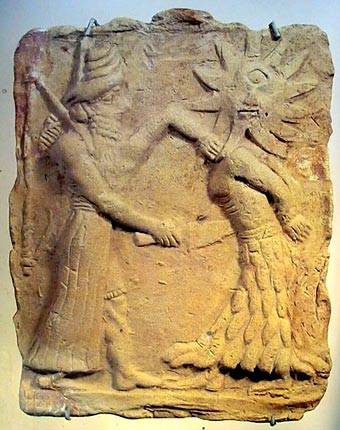
A depiction of Lugh, the Grain God, being sacrificed at the harvest.

This Lammas dinner, I will certainly have a lot to reflect upon! Visiting friends and family, pursuing my passion at school, and spending long days in the woods - it's been quite a summer.